Words Are Not Violence

When I was growing up, we often said "Sticks and stones will break my bones, but words will never hurt me." Last year, I spoke these words at a free speech presentation at a local library and the participants glared at me. I get the same stares when, after I am told that something I said was offensive, I respond by saying "You do you." or "Live and let live" or "To each his own." There are other expressions that don't fare well around the many self-appointed nannies inhabiting American universities, where wokeness still runs amok:

Be yourself

Do your thing

Do your own thing

Be true to yourself

To each their own

Live and let live

I was reminded that it still takes thick skin to say these common sense sorts of things in many places when I spotted this meme:
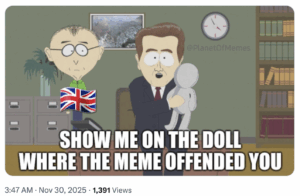
Words are not violence, yet this obvious and useful distinction is being willfully ignored and at great peril to societal flourishing. In his article at Free Press, "Bury the ‘Words Are Violence’ Cliché," Greg Lukianoff comments on this important distinction:

Words are not bullets. Words can’t strike a man from 142 yards away, causing a torrent of blood to erupt from his wound, sending him first to the hospital and then to the morgue. Only bullets can do that.

Upholding that distinction is the North Star of everything I do as president of the Foundation for Individual Rights and Expression (FIRE). For years, I’ve warned that equating words with violence erases the bright line liberal societies drew after centuries of bloodshed. The law draws this line with precision. Advocacy, even vile advocacy, remains protected unless it is intended and likely to produce imminent lawless action. That’s the Brandenburg standard, and it exists because the alternative is to let the powerful decide which ideas are allowed.

Or, as the Supreme Court put it in Texas v. Johnson, “If there is a bedrock principle underlying the First Amendment, it is that the government may not prohibit the expression of an idea simply because society finds the idea itself offensive or disagreeable.” These aren’t lawyerly niceties; they are the safety valves of pluralism. Blur them, and real violence becomes more, not less, likely.

Campus culture has been eroding that line for years. Students are told that offensive ideas are “harm,” that “silence is violence,” and—in a flourish that should now embarrass its users—that speech can be “literally” violence. Jonathan Haidt and I pushed back on that argument almost a decade ago. It’s conceptually wrong and practically dangerous—and has only grown in influence. Teach students that objectionable speech is violence and you invite them to see their own aggression as self-defense. [emphasis added]. This is the bloody fallacy we just witnessed: Accept the premise that rhetoric is a physical attack and you hand extremists a moral permission slip to answer speech with force. We need to bury this trope. Retire it—from classrooms, HR trainings, and editorials—for good.

The numbers show how far the rot has spread. FIRE’s new College Free Speech Rankings, which surveyed nearly 70,000 students across 257 campuses, find a record share now rationalizing coercion. Roughly 34 percent of students say that using violence to stop a campus speech can be acceptable in some circumstances; roughly 70–72 percent say the same about shouting down speakers. In 2021, the violence number was in the low 20s; by last year it was 32 percent. It should be zero. A university that can’t persuade students to reject violence categorically is failing at the first task of liberal education.

Continue ReadingWords Are Not Violence

The citizens of large countries are rapidly disappearing.

Stunning numbers. The citizens of large countries are rapidly disappearing and it's not because of a war or a plague.. It is an unprecedented loss in population:

South Korea is quietly living through something no society has ever survived: a 96% population collapse in just four generations — with zero war, zero plague, zero famine. 100 people today → 25 children → 6 grandchildren → 4 great-grandchildren. That’s it. Game over for an entire nation by ~2125 if fertility stays where it is (0.68–0.72). . . . Japan, Taiwan, Italy, Spain, Singapore, Hong Kong, Poland, Greece — all following the same curve, just 10–20 years behind.

Continue ReadingThe citizens of large countries are rapidly disappearing.

Vinay Prasad Reviews the Risks and Benefits of the COVID Shots

Vinay Prasad is the Director of the Center for Biologics Evaluation and Research (CBER) at the U.S. Food and Drug Administration (FDA). He also serves as the agency's Chief Medical and Scientific Officer, overseeing vaccine, gene therapy, and blood product regulation, while providing senior input on medical policy and regulatory decisions. Today he published a letter to his team at the FDA examining the risks & benefits of the COVID shots. This letter is worth a slow careful read because, among other things, it explains why and how we should to do (and not do) public health in the future. If we take Prasad's analysis to heart, maybe "at least 10 children" did not die in vain. Here's is Prasad's letter:

Dear Team CBER,

I am writing to report that OBPV (The Office of Biostatistics and Pharmacovigilance) career staff have found that at least 10 children have died after and because of receiving COVID-19 vaccination. These deaths are related to vaccination (likely/probable/possible attribution made by staff). That number is certainly an underestimate due to underreporting, and inherent bias in attribution. This safety signal has far reaching implications for Americans, the US pandemic response, and the agency itself, which I wish to discuss here. I also want to address some frequent objections.

Prior to joining the US FDA, the FDA Commissioner closely followed reports of vaccine-induced myocarditis. Unlike the COVID virus, which has a steep age gradient-- being at least 1000 times more likely to kill an 80 year old than an 8 year old-- myocarditis appeared to have the opposite pattern. Young, healthy boys and men-- those least likely to experience bad covid outcomes-- bore the greatest risk. The risk was as high as ~200-330 per million doses given in the highest risk demographic groups. Notably, the US FDA and CDC were not the first to recognize the safety signal-- instead the Israelis were-- and worse in May of 2021, then CDC director Rochelle Walensky stated, “We have not seen a signal and we’ve actually looked intentionally for the signal in the over 200 million doses we’ve given,” Many felt this statement was dishonest and manipulative.

The Commissioner, senior advisor Tracy Beth Hoeg MD PhD, myself and colleagues demonstrated that COVID-19 boosters, and the accompanying mandates by colleges, were on balance harmful to young men in a widely discussed, peer reviewed paper in 2022. Like many academic physicians, we felt the FDA and CDC abdicated their duty to the American people. These agencies did not quickly attempt mitigation strategies such as spacing doses apart, lowering doses, omitting doses among those with prior COVID-19.

Worse, the FDA delayed acknowledgement of the safety signal until after it could extend marketing authorization to younger boys 12-15. This is described by the Commissioner and I in JAMA. Had the acknowledgement come early, these younger boys, who likely did not require COVID-19 vaccination, may have chosen to avoid the products.

In the summer of 2025, Dr. Hoeg began investigating VAERS reports of children who had died after administration of the COVID-19 vaccine. By late summer, she had concluded that there were in fact deaths-- a fact this agency had never publicly admitted.

Dr. Hoeg organized a small meeting to discuss these deaths with (Office of Vaccines Research and Review) OVRR and OBPV stakeholders. The slides she presented, emails she sent, and distorted firsthand reports was shared with media outlets. The general narrative was that OVRR staff disagreed with Dr. Hoeg’s assessment that the deaths were due to vaccine receipt. Some staff present who leaked portrayed the incident as Dr. Hoeg attempting to create a false fear regarding vaccines.

I then asked OBPV to perform a detailed analysis of deaths voluntarily reported to the VAERS system-- in full interest of balance. Causality is easy to assess in a randomized trial, but with case reports, causality is typically assessed on a subjective scale. In this scale ranging from certain to unlikely-- certain, possible/likely, and probable are broadly considered as related to the product.

The team has performed an initial analysis of 96 deaths between 2021 and 2024, and concludes that no fewer than 10 are related. If anything, this represents conservative coding, where vaccines are exculpated rather than indicted in cases of ambiguity. The real number is higher.

This is a profound revelation. For the first time, the US FDA will acknowledge that COVID-19 vaccines have killed American children. Healthy young children who faced tremendously low risk of death were coerced, at the behest of the Biden administration, via school and work mandates, to receive a vaccine that could result in death. In many cases, such mandates were harmful. It is difficult to read cases where kids aged 7 to 16 may be dead as a result of covid vaccines.

Did COVID-19 vaccine programs kill more healthy kids than it saved? We do not have reliable data estimating the absolute benefit (absolute risk reduction) regarding severe disease and death in healthy children from vaccine receipt. OVRR and OBPV rely on observation cohort or case control data with notorious methodologic biases. FDA has never requested the manufacturers demonstrate in randomized fashion that vaccinating children improves these outcomes. The available randomized data in children is deeply limited, and broadly negative for symptomatic infection, as discussed in prior ad-coms. Furthermore, COVID-19 was never highly lethal for children, and now MIS-c has decreased drastically, and the harms, to kids, are comparable to many respiratory viruses for which we do not provide annual immunization.

Comparing the number of kids who died from COVID against these deaths would be a flawed comparison. We do not know how many fewer kids would have died had they been vaccinated, and we do not know how many more kids died from taking vaccines than has been voluntarily reported. Instead, the truth is we do not know if we saved lives on balance.

When it comes to vaccine deaths, VAERS is passively reported. It requires a motivated person, often a doctor, to submit the information. The submission process is tedious and most people who start the form give up along the way. Many more deaths may be unreported. Finally, the FDA has failed to properly enforce many required post market commitments for COVID-19 vaccines, including for pregnant women and to document subclinical myocarditis.

Putting these facts together, it is horrifying to consider that the US vaccine regulation, including our actions, may have harmed more children than we saved. This requires humility and introspection. [More . . . ]

Continue ReadingVinay Prasad Reviews the Risks and Benefits of the COVID Shots

What the Social Engineers Miss About Multiculturalism

Jowan Mahmod discusses the paradox of multi-culturalism in his article: "The Multiculturalism Paradox: How identity-affirming policies fuel the competitive group dynamics that weaken national cohesion."

[T]he core creed of multiculturalism: noble intentions and moral rhetoric paired with total disregard for real-world outcome . . . . Multiculturalism promotes the celebration of difference on the assumption that strengthening one’s group identity naturally produces greater openness toward, and acceptance of, others. Few ideas have been more widely embraced—and more poorly understood—than this. . . Ultimately, tolerance does not grow out of abstract ideals. It grows from loosening the grip of collective identity and seeing others not as representatives of a category but as individuals. Societies must ensure that people of all backgrounds can develop a strong sense of personal identity. This is not merely desirable but essential for any nation that hopes to remain both diverse and cohesive. Prejudice is rooted in group belonging and in the basic psychology of us-and-them. When institutions encourage people to define themselves primarily through group identity, they inevitably reinforce the very us-and-them thinking that fuels prejudice and division.

A functioning multicultural society is not one that obsessively manages groups and their identities, but one that enables individuals to move beyond them and form connections based on shared human and civic values. Only then can we approach the kind of multicultural society we claim to aspire to, and that can be achieved only by loosening, not tightening, the hold of group identity.

Mahmod's full article can be found here.

Continue ReadingWhat the Social Engineers Miss About Multiculturalism

About Honey Badgers

Amazing footage of honey badgers:

I asked Grok about their fearlessness:

Honey badgers (Mellivora capensis), also known as ratels, have earned a legendary reputation for their fearlessness, often described as one of the toughest and most aggressive animals in the wild despite their relatively small size—typically weighing 20-35 pounds and measuring about 2-3 feet long. This boldness stems from a combination of physical adaptations and behavioral traits that allow them to confront much larger predators and threats without hesitation.One key factor is their thick, loose skin, which acts like natural armor. This rubbery hide is resistant to bites, stings, and even arrows or machetes in some cases, enabling honey badgers to shrug off attacks from lions, hyenas, leopards, or venomous snakes.

The looseness of the skin also lets them twist around in a predator's grip to counterattack, turning defense into offense. They're equipped with powerful jaws capable of crushing tortoise shells or bones, sharp claws for digging and fighting, and a ferocious bite that they use relentlessly.

Behaviorally, honey badgers display an almost reckless aggression. They don't back down from confrontations, often initiating fights with animals many times their size, such as African rock pythons or even packs of wild dogs. This is partly due to their solitary, nomadic lifestyle and a diet that includes dangerous prey like cobras and beehives—hence the "honey" in their name, as they raid hives fearlessly despite thousands of stings, thanks to a partial resistance to bee venom. They also have a high pain tolerance and can endure severe injuries, sometimes continuing to fight even after being bitten by venomous snakes, as they possess some immunity to certain toxins.

When threatened, they emit a foul-smelling secretion from anal glands to deter enemies, much like a skunk, and produce loud, intimidating growls or screams. This combination has led to honey badgers being named the "World's Most Fearless Creature" by the Guinness Book of World Records, a title that captures their indomitable spirit in folklore and viral videos alike.

However, their "fearlessness" isn't mindless; it's an evolutionary strategy for survival in harsh African savannas, where they have few natural predators as adults. While they can be aggressive when cornered or protecting food, they're not always seeking conflict—much of their boldness comes from necessity rather than choice.

Continue ReadingAbout Honey Badgers