Population Tetris

A few years ago, in a post called "Oil Tetris," I used the game of Tetris to illustrate the dangers of being dependent on petroleum and the fact that the United States consumes 5,000 gallons of gasoline per second. Today, I am offering a similar set of images to illustrate my concerns regarding the dangers of overpopulation (and its attendant degradation and depletion of natural resources). As one who has pledged to support the 2010 GPSO effort, I am advocating that we directly and unflinchingly address the issue of whether we have overloaded our planet, our little lifeboat in outer space, with people. Here's the general idea: If there were still only 2.5 billion people in the world (as there were as recent as 1950), it starved_girlwould be monumentally easier to sustainably tap into the world's resources to feed, house and clothe them. In 1950, it was not an empty world; 2.5 billion is a hell of a lot of people. Admittedly, it was not a peaceful world--it never has been a peaceful world, but it wasn't a world where so many basic critical resources were being stressed and exhausted (including water, oil, phosphates for fertilizer, food supply, ocean fishing and soil). So here is the illustration. Back in 1950, the baseline for providing for 2.5 people was much lower than it currently is. There was room for error--room to make changes in the way the world was being run while still giving access for most people regarding most resources. Here is the world in 1950: tetris-lowThe falling pieces represent societal needs, and there was more ability to meet those needs in 1950. But now the world is a different place, where 2 billion people live on less than $2/day. It's a world where huge numbers of people are without water and sanitation. It's a world were valiant efforts are necessary to keep the food supply even stable, much less to increase it. Back in 1950, we could increase the food supply significantly, because we hadn't yet filled the world with 6.7 billion people and we hadn't yet planted virtually every square mile that could be planted. Now, many emergencies regarding resources require desperate responses that aren't often publicized by the Western media; knowing that there are billions of hungry people throws a damper on our annual Christmas-time consumerist orgy. That's how difficult it is for affluent Westerners to give a damn about the big picture, making it naive to suggest that we simply need to redistribute existing resources and continue packing greater numbers of people onto the planet. Nor is it easy to reason with many religions that find it utterly inconvenient to limit the ability of their members to "go forth and multiply." There is little room for error these days, as represented by the following Tetris board: tetris-highThe question, then, is whether it is responsible to run our world like a highly stacked Tetris board, where starvation already affects one billion people and yet we continue to add 1.5 million more people to our resource-challenged world every week. Is it wise to live so dangerously? And for those who are tempted to comment that I should focus on things other than population, such as new technologies and social justice, by all means. I do that almost every week in my posts. But let's consider whether we would be better off also having the courage to address the basic issue of the carrying capacity of the planet.
Continue ReadingPopulation Tetris

Border Incident

You may have heard about this by now. Biologist and science fiction writer Peter Watts was stopped on his way back into Canada by border guards. He'd been helping a friend in the United States move and he was returning. He was flagged to the side and the guards fell on his vehicle. He stepped out to ask what was going on, was told to get back in his vehicle, and when he asked again for the reason for the search, he was pepper sprayed, beaten, thrown in a lock-up overnight, and the next day sent into a winter storm on foot in shirtsleeves, all his personal property confiscated pending arraignment on charges of assaulting a federal officer. In his own words:

Along some other timeline, I did not get out of the car to ask what was going on. I did not repeat that question when refused an answer and told to get back into the vehicle. In that other timeline I was not punched in the face, pepper-sprayed, shit-kicked, handcuffed, thrown wet and half-naked into a holding cell for three fucking hours, thrown into an even colder jail cell overnight, arraigned, and charged with assaulting a federal officer, all without access to legal representation (although they did try to get me to waive my Miranda rights. Twice.). Nor was I finally dumped across the border in shirtsleeves: computer seized, flash drive confiscated, even my fucking paper notepad withheld until they could find someone among their number literate enough to distinguish between handwritten notes on story ideas and, I suppose, nefarious terrorist plots. I was not left without my jacket in the face of Ontario’s first winter storm, after all buses and intercity shuttles had shut down for the night.

In some other universe I am warm and content and not looking at spending two years in jail for the crime of having been punched in the face.

Here is a post on his behalf. A legal defense fund is being built by the writing community as you read this. The first thing, I admit, that occurred to me when I heard about it was a kind of reflexive "well, he must've said something," the kind of self apology for representatives of my government that springs automatically to mind. Because none of us want to believe that thugs and bullies work for us. I dismissed that idea. Watts is the least likely individual to provoke such a response. [more . . . ]

Continue ReadingBorder Incident

Training people to quantify risks

In the October 29, 2009 edition of Nature (available online only to subscribers), writer Michael Bond considered whether members of the general public could benefit from specialized training so that they could better appreciate risks. Believe it or not, there's a controversy in this field. According to Bond, many specialists think that the public "will never really be capable of making the best decision on the basis of the available scientific information." This pessimistic position advocates that risk-related decision-making should be conducted by paternalistic expert agencies, which should nudge people into making better decisions without educating them deeply as to why they should make the choices they are being encouraged to make. A classic example is changing the default on one's driver's license with regard to whether one would like to donate one's organs after death. Making the default that one will donate one's organs unless the box is checked dramatically increases those who participate in the program. The optimistic camp is represented by a variety of experts, including psychologist Gerd Gigerenzer, who advocates that "people can be taught to improve their decision make and skills." As the Nature article points out, poor decision-making is ubiquitous and it seriously undermines the well-being of people. When faced with unfamiliar emotion-fraud situations, "most people suspend their powers of reasoning and go with an instinctive reaction that will often lead them astray." Bond gives the examples of people refusing to get vaccinations for measles-mumps-rubella, and the unjustified fear many people have with regard to genetically modified crops. He also mentions the statistical deficiencies of healthcare providers, an issue I discussed in an earlier post. We still get all exercised about snakes, even though we rarely encounter them, but we ignore such things as peak oil and the danger of getting into automobiles. Why do people have such a hard time evaluating risks?

The problem, as many researchers in cognitive neuroscience and psychology have concluded, is that people use two main brain systems to make decisions. One is instinctive--it operates below the level of conscious control and is often driven by emotions. The other is conscious and rational. The first system is automatic, quick and highly effective in situations such as walking along a crowded pavement, which requires the near-instantaneous integration of complex information and the carrying out of well-practiced action. The second system is more useful and novel situations such as deciding on the savings plan, which calls for deliberate analysis. Unfortunately, the first system has a way of kicking in even when deliberation would serve best.
Gigerenzer argues that proper education and training could assist people to put the rational system in charge of the instinctive one. He claims that even one half-hour of training in statistics significantly improves people's ability to quantify risk. Bond lists several promising methods for improving critical thinking. One method is to train people to look at problems from an outsiders’ perspective. Another is training them to weigh multiple options simultaneously rather than looking at options one at a time. Another trick is to use "actively open-minded thinking," which requires people to intentionally consider more than the first conclusion that comes to their mind. How important is it that people learn better how to evaluate risks? In addition to the examples cited at the top of this article, research suggests that people who suffer from innumeracy overestimate the likelihood of terrorist attacks. They "tend to have a high body-mass index and tend to be poor at managing their own health." Those who believe that people can be trained to better appreciate statistics believe that people need to be taught to better "feel the numbers." They need to use real-life situations to illustrate the statistics. Many students don’t receive any training in statistics at all. In fact, your article mentions that only one law school in the United States requires a course in statistical thinking. This means that many judges and lawyers are not properly prepared to assess risks in our modern world. Younger students are neglected too. They are only taught the mathematics of certainty (such as geometry and trigonometry), not the mathematics of uncertainty. Bond’s article concludes with the suggestion that we now have a society of people who don't understand that they don't understand. He argues that society would see long-term benefits if we would only stress the need for a rigorous education in the statistics of risk.

Continue ReadingTraining people to quantify risks

Delighted to be back to changing my own oil

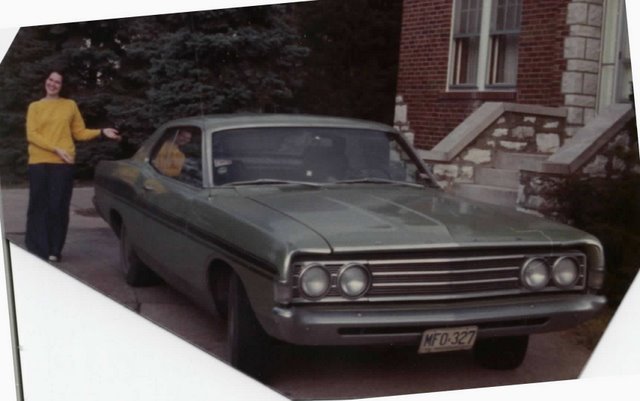
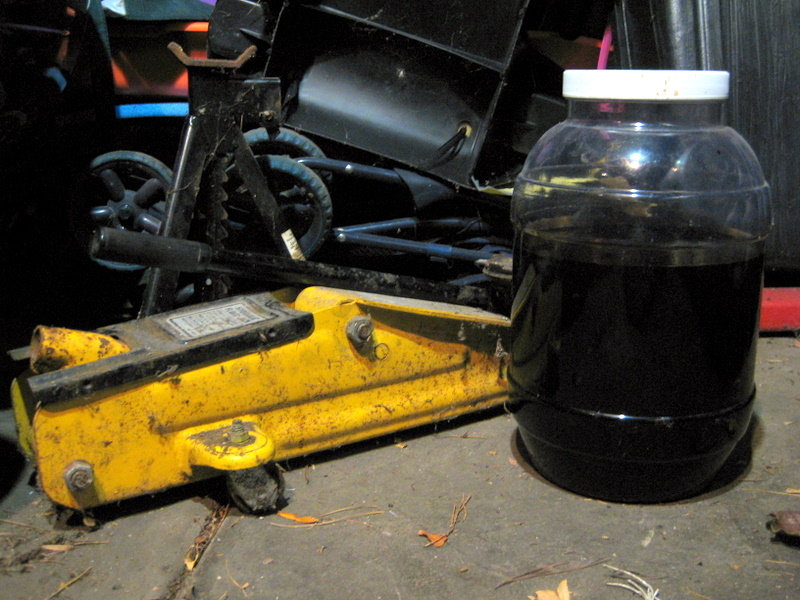
Back in 1974, when I bought my first car (a green 1969 Ford Fairlane 500 - see inset), my limited income as a teenager required me to do most of my own maintenance. That included such things as oil changes, as well as brake jobs, replacing a carburetor, and many other parts. I purchased a big manual for my car and spent some long nights in the garage making lots of mistakes and learning from many of them. I also remember the feeling of being self-sufficient and frugal. 1969 Ford Fairlane; Former girlfriend serving as model After I got my first full-time job, I drifted away from working on my own car. Until now. Seeing a $27 oil change sign from a distance, I pulled into Jiffy Lube. Only after I pulled in did I notice that this was a special price that didn't apply to me because it wasn't 7-10 am. Then, after the Jiffy Lube guy treated me rudely and then told me that my oil change, using basic 5W30 oil, would cost almost $40, I blurted out, "Forty dollars for an oil change?" The Jiffy Lube guy protested, "That includes topping off your windshield washer solution and cleaning your windshield." I said, "No thanks." I decided to remind myself what it's like to slide under the car and get oil on my hands, and to do physical work, a welcome change from my desk job. I drove to the local O'Reilly Auto Parts store, where I bought enough oil and oil filters for three oil changes for $40. O'Reilly told me that they would happily dispose of my used oil at no charge. I also bought a gallon of windshield wiper fluid, an air filter and some new wiper blades for a fraction of what Jiffy Lube charges. Jiffy Lube specializes in telling you that you need these sorts of things and then gouging you for them. If you don't believe me, check the Jiffy Lube web site -- what does it tell you when a big company doesn't have the balls to tell you how much they will charge you for standard services until they have your car hostage? img_1172 Back at home with a case of oil in my trunk, all I had to do was find my old jacks (a hydraulic jack for lifting and a stand jack for safety), plastic oil pan, funnel, oil filter wrench and a few other tools. None of this is expensive stuff, in case you're interested in joining me in the Jiffy rebellion. BTW, my Jiffy Lube story is not unique. One hurdle: it took me about 10 minutes to locate the oil filter on my '98 Saturn SL-2 (It's deeply buried under the back of the engine, requiring me to crawl way under). Because it got dark while I was working, I pulled out my trouble light and that made it official: I was now reliving my teenage years and enjoying it immensely. Take that, Jiffy Lube! Added bonus: I now know exactly what kind of oil is really going into my car and that the right amount is going in. Another bonus: Next time I give one of the cars an oil change, I'll give my daughters a little lesson about car maintenance--a passing of the baton. Yet another bonus: In less than the time it takes to drive to Jiffy Lube and back, I will have changed my own oil without burning any gas. Changing one's own oil is not a big deal. But saying no to old expensive habits and getting back to a simpler, cheaper and self-reliant way of life, one step at a time, can be a big deal.

Continue ReadingDelighted to be back to changing my own oil

AIG secured our (bleak) financial future

While looking through some older articles, I happened across a November 2005 edition of Natural Science. An AIG ad decorates the back cover. Note the AIG claim that "You can count on us." Also note the claim that "50 million customers know the strength and experience of the AIG companies can help secure your financial future." AIG ad - 2005 None of this fluff was technically untrue. It turned out to be true in terrible way that will rob Americans of tax revenue for decades to come. AIG has helped to secure a bleak financial future for most Americans, while securing a windfall for a well-connected group of elite executives. But perhaps this tragedy and this should-be-crime needs to be quantified to be appreciated. The AIG bailout followed AIG's calculated decisions to gamble in a dangerous way in search of obscene profits, rather than to be content with its honest business of selling insurance. Then, when the house of cards came crashing down, AIG somehow convinced our lawmakers to divert our precious tax dollars to preserve AIG, which responded by trying to pay out $165 million in bonuses to its employees for a job well done. How much federal tax money has gone to AIG to date? The latest count is $30 billion dollars. To put that in perspective, note that there are approximately 112,000,000 American households. If each American household were to each bear the same share of this $30B bailout of AIG, they would each pay more than $250. $250 is considerably more than the price of a Nintendo Wii. Can you imagine the outcry if Congress had approved buying a Wii for every household in America? What a horrific and irresponsible waste of money that would have been, especially when that money is desperately needed for education, infrastructure and alternative energy, to name only a few things. AIG is the poster boy of why we cannot have "too big to fail," yet it is not on President Obama's agenda to break up the big financial corporations that still sit there like huge ticking time bombs. It turns out that in the process of "saving" AIG, Treasury Secretary Tim Geithner (then acting as president of the New York Fed) hammered American taxpayers. If you Google "AIG criminal," you'll find almost nothing of note in recent months. Apparently, intentionally threatening the entire American economy in the pursuit of greed is not a criminal issue. Ruining the national economy is not as serious as stealing bread from a grocery store or smoking a joint.

Continue ReadingAIG secured our (bleak) financial future