Pseudo science at the New York Expo
Ebonmuse was was appalled at the version of enlightenment he encountered in the promo materials to the upcoming New York Expo. Pseudo-science is alive and well in 2011.

Ebonmuse was was appalled at the version of enlightenment he encountered in the promo materials to the upcoming New York Expo. Pseudo-science is alive and well in 2011.
NPR is fighting hard to keep it's sliver of federal funding. On the Hill, Anthony Weiner aims his arrows at the Republicans. And at least one Republican, Ron Paul, understands that our Nation's (destructive) money pit is Afghanistan, not NPR. Every week we spend four times more on our military adventure in Afghanistan than we spend for one year on funding domestic public media (we spend a lot more on propaganda devoted for international audiences than we spend on domestic programming).
CFI reports that the U.S. military encourages overtly religious gatherings, but pulls the rug out from under non-theist activity.
At the November 2010 TEDx:GPGP (Great Pacific Garbage Patch), Van Jones spoke on “[t]he economic injustice of plastic”.
Jones is an attorney and activist and was the “Special Advisor [to President Obama] for Green Jobs”. He is also the author of “The Green Collar Economy: How One Solution Can Fix Our Two Biggest Problems” (subject of mixed reviews but endorsed by prominent environmental personalities). Activism begets controversy and Jones is not immune. Regardless of the controversies, he makes good points. While it seems to me that his ideas as presented are short on substance, ideas still have to start somewhere and merely talking about them raises awareness of an issue.
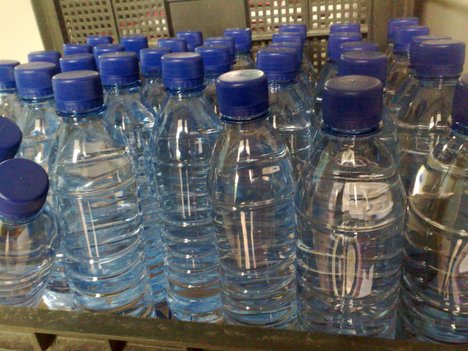 Jones approaches the problem of plastic pollution from a perspective of social justice. The worst of plastics – most toxic and carcinogenic – are also the cheapest. The poorest have no choice to buy anything else.
The manufacture of plastics certainly does not take place in the wealthier neighborhoods, rather, in places where the poorest can afford to live. Jones also claims that plastics at the point of disposal affect the poorest because “too often that [plastic] bottle is going to be put on a boat… go all the way across the ocean at some expense…wind up in a developing country, often China…[where] that bottle winds up getting burned” ... releasing harmful chemicals.
And Jones calls attention to “Cancer Alley”, that region in Louisiana which reportedly has a higher than average cancer rate among residents, which also happens to be the “petrochemical corridor”.
Now, even if that bottle or any plastics are actually recycled, the next generation is not going to be another container; more likely they will be secondary products such as textiles and plastic lumber for park furniture or wheel stops, none of which are “recyclable” and only temporarily divert from the landfills we are trying to avoid.
Jones says
Well, the root of this problem, in my view, is the idea of disposability itself….In order to trash the planet, you have to trash people…we are at a moment where the coming together of social justice as an idea, and ecology as an idea,we can finally now see that they are really, at the end of the day, one idea.”And his idea:
We don’t have disposable anything. We don’t have disposable resources. We don’t have disposable species. And we don’t have disposable people either. We don’t have a throwaway planet.Jones hammers gently that disposability is something we believe in, but we don’t realize the cost in human capital that goes with that (“25% of the people incarcerated in the world are incarcerated in the U.S”). --much more follows--
What follows is utterly precious, needing no further comment. Here's the opening sentence of some extraordinary information provided by the U.K. Guardian:
The US military is developing software that will let it secretly manipulate social media sites such as Facebook and Twitter by using fake online personas to influence internet conversations and spread pro-American propaganda.