The Two Starkly Different Meanings of “Black Lives Matter,” and Political Ideas That Must Never Be Criticized

"Black Lives Matter" is a simple looking phrase, but it functions as a Trojan Horse. Many people don't understand that there is a big difference between A) stating the obvious fact that Black lives do, indeed, matter and B) embracing the controversial political agenda of the Black Lives Matter organizations. Just because one believes A doesn't necessarily mean that one believes B, but this conflation flies under the radars of many people who embrace both A and B even though the only part that they have carefully considered is A.

Consider this excerpt from a recent news article about Nick Buckley, a man who has spent many years of his life helping desperate others through a charity he founded in 2011, Mancunian Way, based in Manchester, England. The problem started when Nick dared to write an article:

In the article the 52-year-old started by saying: “Of course black lives matter. Let’s get this obvious point over and done with at the beginning”, but went on to criticise the political agenda of the organisation BLM which sought to repudiate the values expressed by Martin Luther King.

I am sympathetic to Nick Buckley's clearly stated concerns. Like Buckley, I am concerned that some of the political ends of BLM sharply conflict with the wisdom of Martin Luther King. The fact that Nick Buckley dared to speak up about this critical issue cost him his job and that is a tragedy.

In some circles, the phrase "Black Lives Matter" has taken on the status of an unassailable fundamentalist religion, which is extremely unfortunate. Whenever this phrase is uttered, we should be asking whether the speaker is asserting A, B or both A and B.  Whereas A is self-evident truth to me, B is a complex set of ideas, many of them ill-defined and/or problematic.

Every idea, especially every political idea, should be open to vigorous criticism and discussion. There should be no exceptions, for the reasons carefully stated by John Stuart Mill in his work, On Liberty. To every claim I respond: "Let's test it." To the extent that any ideas are declared to be sacrosanct, off-limits to discussion and criticism based on science, statistical analyses and the diverse wisdom collected by thinking people from the beginning of time, our democracies are dead.

Continue ReadingThe Two Starkly Different Meanings of “Black Lives Matter,” and Political Ideas That Must Never Be Criticized

Questioning the “Political Spectrum”: To What Extent Are Political Parties Social Clubs?

According to this article by Hyrum Lewis ("Our Big Fight Over Nothing: The Political Spectrum Does Not Exist"), the political "spectrum" is primarily tribal. Lewis states that many of the respective policy positions in the platforms of each of the two main political parties are not glued together by overarching consistently applied principles. These conclusions of Lewis run counter to the writings of George Lakoff, who (in his book, Moral Politics) argues that Republican positions derive from the metaphor of a "stern father," whereas the Democrat positions derive from the metaphor of the "nurturant parent." To the extent that Lewis is correct and that Lakoff has overstated his case, this is an inconvenient fact for those of us who claim that our political stances are completely principled, not adopted as the result of social pressure. Here are a few excerpts from Lewis' article:

In the essentialist theory, ideologies are unchanging, transcendent principles, while parties are evolving social organizations that can be “captured” by the ideologies. In the social theory, by contrast, ideologies don’t capture parties; parties capture ideologies—that is, they redefine them. Once again, research supports the latter: what is considered “right-wing” or “left-wing” is simply whatever the Republican and Democratic Parties happen to stand for at a given moment. Left-right ideologies are tools of self-delusion—they let us indulge the fantasy that our partisanship is principled rather than tribal, i.e., that there is some noble ideal connecting all the distinct and unrelated issues that our party happens to support. But essentialist predictions do not hold up to reality. . .

An alternative to this essentialist theory is the “social theory” of ideology, which says that distinct political positions correlate because they are bound by a unifying tribe. If the right-wing team is currently in favor of tax cuts and opposed to abortion, then those who identify with that team will adopt those positions as a matter of social conformity, not because both are expressions of some underlying principle.

... Public opinion polls further reinforce the point, showing that left-right ideologues often switch their beliefs to conform to the tribe. In the past decade alone we’ve seen self-described conservatives go from being anti-Russia to more pro-Russia, strongly pro-trade to strongly anti-trade, believing that personal character matters a great deal in politicians to believing that it matters hardly at all, staunchly interventionist in foreign policy to staunchly isolationist. Where is the “essence” behind all of this variation? It doesn’t exist. The views associated with left and right are constantly shifting for social reasons that have nothing to do with essential principles.

Continue ReadingQuestioning the “Political Spectrum”: To What Extent Are Political Parties Social Clubs?

How the Lack of Money and Power Corrupt the Message of People Trying to Protest the Murder of George Floyd

Here’s how I would explain the violent George Floyd protests to a Martian anthropologist.

The U.S. Constitution gives a theoretical “right” to free speech but not a real-life ability to speak powerfully or widely. Whereas money and power give rich people many ways to blast out their messages, ordinary Americans wanting to get out their messages often get eaten in the public square by street vultures. Consider these two examples.

When Donald Trump wants to make an announcement, he commands dozens of types of federal military and police organizations. This allows Trump to calmly walk up to a podium or stroll down the street in order to tell Americans what a smart man he is, or how religious or healthy or whatever. While he stands up there flatulating these lies, no one interrupts Trump because he controls a massively expensive and well-armed system of law enforcement officers and they extend their perimeter so widely that unfriendly others can’t get close. If any protestors try to get close enough to interrupt Trump’s bombastic bullshit, Trump’s police officers and soldiers throw their asses into jail.

Compare this to the George Floyd protests, where many thousands of ordinary Americans took to the streets, but they were then on their own. Ordinary Americans don’t control law enforcement. They cannot control their perimeters in order to safely deliver their message without interruption. As we’ve seen over and over, as soon as the heartfelt protestors get started delivering their messages in the public square, the area becomes an undefended magnet for uninvited masses of miscreants: anarchists, vandals, arsonists, inciters of violence and many others who clearly don’t give a shit about George Floyd. Virtually every time ordinary people gather together by the hundreds or thousands, their message gets corrupted because ordinary Americans do not have the money or power to hire hundreds of law enforcement officers to control their perimeter. Their message gets diluted by broken glass, thrown bricks and burning businesses, as well as horrible injuries, shattered dreams and gruesome deaths. Following this widespread mayhem, the heartfelt protestors get blamed for something they never planned or intended. The many people who simply wanted to bring attention to George’s Floyd’s murder are accused of intentionally destroying America’s central cities. The photos appearing in the mass media are Exhibits A-Z.

That’s how it almost always ends for those without great amounts of money and power. That is how it is in this Land where everyone only has the right to pointlessly yell out their grievances in their own living room or from their front porch. This is the Land where people of modest means can no longer assemble in peace to deliver stinging rebukes to corrupt politicians because they do not have the money or power to control and deliver a message in the public square, no matter how important that message is.

Continue ReadingHow the Lack of Money and Power Corrupt the Message of People Trying to Protest the Murder of George Floyd

Masks and Distance: The Limits of Cheap Political Virtue Signaling

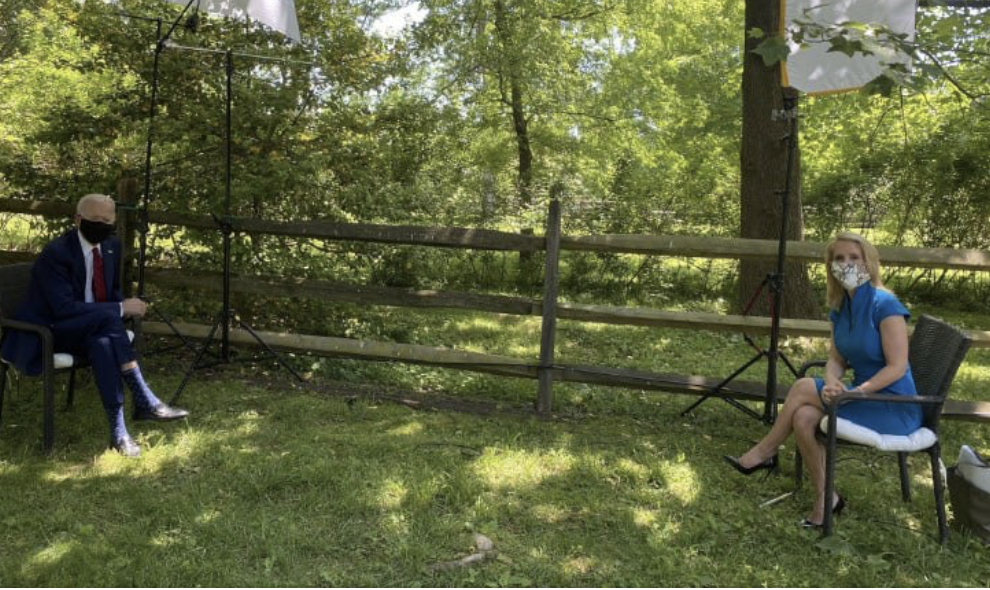
Today on FB, I displayed this photo of Joe Biden and made this comment:
I'm all for wearing a mask when you need to be near other people, but really? A Twitter comment (see the comments here): "Virtue Signalling knows no distance."

The post drew considerable criticism that caused me to better explain my concern. I did that as an addendum to the original post, as follows:

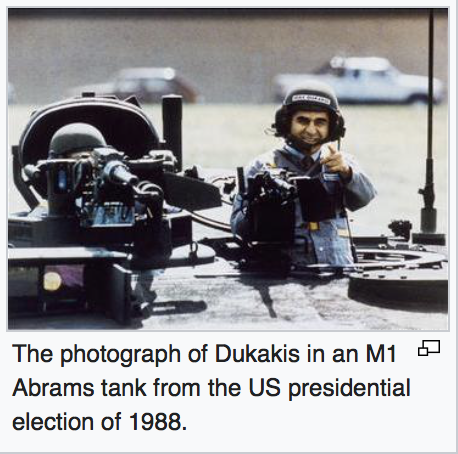
Biden's job is to either have Trump voters switch over to him or to convince them that they don't care enough  that they simply won't vote for Trump (I know several Republicans of this latter type). I don't want this election to be a repeat of Michael Dukakis riding in the tank. I fear that this type of image is going to be repeatedly and effectively exploited by Republicans to make the argument that Biden is not a strong and courageous leader.
The CDC has repeated and strongly warned that we maintain a distance of six feet from other people. CDC further "advises" that people wear homemade masks.  I fear that this type of image of Biden sitting 15 feet apart AND wearing a mask is going to be repeatedly and effectively exploited by Republicans to make the argument that Biden is not a strong and courageous leader.  There are many other images that will be used by Trump, including images where Biden and his wife are wearing masks where no other people are nearby.

Those of us who have the strength and courage to unplug from the political matrix instantly realize that this exploit that will certainly be used by Trump will be effective when compared to "fearless" images of Trump NOT wearing a mask. Who do you want as the leader of the United States? The man who worries about invisible germs that kill only 1% of people?  Or a courageous man like Trump?  That will be the argument and (based on the rhetoric of the clamor-to-reopen-crowd) this argument will siphon votes away from Biden.

Biden will get the votes from his base, more or less, no matter what he does between now and November, despite his many flaws. Further, his base will forgive him the "sin" of not wearing a mask while sitting 15 feet from one other person outdoors. And, as one of the commenters on my FB page indicated, Biden took off his mask for the actual interview. Good. But this image will live on in isolation from the fact that he took off the mask to conduct the interview, as will thousands of similar images of Biden. Unfortunately, there are real consequences in the balance. Should Biden be 99% safe or 99.99999% safe? It's not a decision for me to make, but while prudent mask-wearing is absolutely a good thing, mask-wearing that looks weak and paranoid will hurt Biden's chances in November. It is my concern that the cheap version of virtue signaling suggested by this image will be quickly sniffed and identified as such by all voters who aren't already for Biden. Many of the people who are already strongly for Biden might will be oblivious to this serious problem.

I'll add one more thing. We need to be sensitive to the difference between cheap virtue signaling and expensive virtue signaling. What looks impressive when done by people we believe to be on our team can look terrible when done by members of the other team. There a lot going on under the hood and it includes confirmation bias and displaying of "badges" of in-group membership.  This difference is explained by Geoffrey Miller in this definitional section from his new book, Virtue Signaling: Essays on Darwinian Politics and Free Speech (2020):

We all virtue signal. I virtue signal; you virtue signal; we virtue signal. And those guys over there, in that political tribe we don’t like – they especially virtue signal. (Just as they believe that we do.) Let’s not pretend otherwise. We are humans, and humans love to show off our moral virtues, ethical principles, religious convictions, political attitudes, and lifestyle choices to other humans. We have virtue signaled ever since prehistoric big-game hunters shared meat with the hungry folks in their clan, or cared for kids who weren’t their own.

There’s virtue signaling, and then there’s virtue signaling. This book is about both kinds. On the one hand, there’s what economists call ‘cheap talk:’ signals that are cheap, quick, and easy to fake, and that aren’t accurate cues of underlying traits or values. When partisans on social media talk about political virtue signaling by the other side, they’re usually referring to this sort of cheap talk. Virtue signaling as cheap talk includes bumper stickers, yard signs, social media posts, and dating app profiles. The main pressure that keeps cheap talk honest is social: the costs of stigma and ostracism by people who don’t agree with your signal. Wearing a ‘Make America Great Again’ hat doesn’t cost much money, but it can cost you friendships. On the other hand, there’s virtue signaling that’s costly, long-term, and hard to fake, and that can serve as a very reliable indicator of underlying traits and values. This can include volunteering for months on political campaigns, making large, verifiable donations to causes, or giving up a lucrative medical practice to work for Doctors Without Borders in Haiti or New Guinea. The key to reliable virtue signals is that you simply couldn’t stand to produce them, over the long term, if you didn’t genuinely care about the cause.

[V]irtue signaling can … be the worst of human instincts. It drives most of partisan politics, especially on social media. It drives the demands to censor, fire, cancel, and ostracize people who express the wrong opinions. It drives moral panics about satanic ritual abuse, ‘rape culture,’ and ‘porn addiction.’ It drives white nationalists to run over protesters. It drives antifa to beat up journalists. … Some of this is cheap talk, but some of it is reliable signaling. What distinguishes good virtue signaling from bad virtue signaling isn’t just the reliability of the signal. It’s the actual real-world effects on sentient beings, societies, and civilizations.

[I attempted to find the source of the photo, which I spotted on Twitter, but was unsuccessful]
Continue ReadingMasks and Distance: The Limits of Cheap Political Virtue Signaling

Jonathan Haidt Describes Today’s Conservatives and Liberals

I've closely followed the writings of Jonathan Haidt. His conclusions are closely tied to scientific findings. He crosscuts the current American political divide. He is hopeful that we will find our way as a country.

In this recent article at The Atlantic, "Jonathan Haidt Is Trying to Heal America’s Divisions: The psychologist shares his thoughts on the pandemic, polarization, and politics," Haidt explains what has gone wrong with many of those who consider themselves to be liberals and conservatives. What they have in common is authoritarianism populism:

Haidt laments the state of contemporary American politics, believing that on both the right and the left we’re seeing populism that responds to real problems but in illiberal ways. “On the right,” he said, “the populism there is really explicitly xenophobic and often explicitly racist … I think we see strands of populism on the right that are authoritarian, that I would say are incompatible with a tolerant, pluralistic, open democracy.”

Looking in the other direction, Haidt says, “we’ve messed up the word liberal and we’ve used it to just mean ‘left.’ I’ve always thought of myself as a liberal, in the John Stuart Mill sense. I believe in a society that is structured to give individuals the maximum freedom to construct lives that they want to live. We use a minimum of constraint, we value openness, creativity, individual rights. We try hard to maximize religious liberty, economic liberty, liberty of conscience, freedom of speech. That’s my ideal of a society, and that’s why I call myself a liberal.”

But on the left, Haidt said, “there’s been a movement that has made something else sacred, that has not focused on liberty, but that is focused instead on oppression and victimhood and victimization. And once you get into a framework of seeing your fellow citizens as good versus evil based on their group, it’s kind of a mirror image of the authoritarian populism on the right. Any movement that is assigning moral value to people just by looking at them is a movement I want no part of.”

Haidt went on: “I think this is a very important point for us to all keep in mind, that left and right in this country are not necessarily liberal and conservative anymore. On the left, it’s really clear that there are elements that many of us consider to be very illiberal; and on the right, it’s hard to see how Trump and many of his supporters are conservatives who have any link whatsoever to Edmund Burke. It’s very hard for me to see that. You know, I would love to live in a country with true liberals and true conservatives that engage with each other. That, I think, is a very productive disagreement. But it’s the illiberalism on each side that is making our politics so ugly, I believe.”

The key quote from the passage above: "Any movement that is assigning moral value to people just by looking at them is a movement I want no part of.” This is a modern version of MLK's classic advice that is scorned by many modern day "liberals": "I have a dream that my four little children will one day live in a nation where they will not be judged by the color of their skin, but by the content of their character. Why has this beautiful sentiment become so difficult today?

Continue ReadingJonathan Haidt Describes Today’s Conservatives and Liberals