Since we need to amend the Constitution anyway . . .

Perhaps we ought to follow the example of the government of Taiwan, and carve out two new branches of government.   In addition to three branches of government matching the American branches of the Executive, Judicial and Executive, the Taiwanese have two additional branches of government: 1. The Control Yuan is an investigatory agency that monitors the other branches of government . . . No member of the Control Yuan can hold another public office or profession while serving in the branch (according to Article 103 of the constitution), and members must be able to perform absent of partisan control or influence.  Wouldn't it be helpful to have such an independent branch of government to root out corruption and prohibit pork? 2. The Examination Yuan is in charge of validating the qualification of civil servants in the Republic of China.  Wouldn't it be interesting to see whether which of the candidates currently campaigning for President of the U.S. could pass a civil service test or, better yet, the U.S. Foreign Service Examination.
Continue ReadingSince we need to amend the Constitution anyway . . .

Trillions in secret loans by the Fed reveal massive welfare for too-big-to-fail banks

Thanks to incorruptible Senator Bernie Sanders, who describes himself as a democratic socialist, the Federal Reserve has been forced to reveal information regarding loans that it tried hard to keep secret.   Here's what we are finding, according to IPS:

The Fed provided loans to JP Morgan Chase bank to acquire Bear Stears, a failed investment firm; provided loans to keep American International Group (AIG), a multinational insurance corporation, afloat; extended lending commitments to Bank of America and Citigroup; and purchased risky mortgage-backed securities to get them off private banks’ books. Overall, the greatest borrowing was done by a small number of institutions. Over the three years, Citigroup borrowed a total of 2.5 trillion dollars, Morgan Stanley borrowed two trillion; Merryll Lynch, which was acquired by Bank of America, borrowed 1.9 trillion; and Bank of America borrowed 1.3 trillion.
I'd call it welfare for the too-big-to-fail. Phase One of the bailout was to address a legitimate liquidity crisis. Phase Two went far beyond this, and was kept secret because the public would never have consented to the above actions Here's how Economist Randall Wray sums up Phase Two:
"But then it turned to phase two, which was to try to resolve problems of insolvency by increasing Uncle Sam’s stake in the banksters’ fiasco. That never should have been done. You close down fraudsters, period. The Fed and FDIC (Federal Deposit Insurance Commission) should have gone into the biggest banks immediately, replaced all top management, and should have started to resolve them," Wray said.

Continue ReadingTrillions in secret loans by the Fed reveal massive welfare for too-big-to-fail banks

There REALLY Ought a be a Law . . .

Former Vice President Dick Cheney has published an unapologetic paean to his war crimes, torture and tortured reasoning in a memoir which he calls; In My Time. Needless to say, some find Mr. Cheney’s alleged memoir a work of fiction and suitable “for supermarket tabloids” and “full of cheap shots.” The book will be out August 30, 2011. Mr. Cheney and his attack-dog daughter, Liz, have launched another campaign to clean up Mr. Cheney’s image but, Mr. Cheney remains one of the most unpopular politicians in American history with an approval rating going towards the single digits. In Mr. Cheney’s book he highlights how he counseled bombing Syria to “restore America’s standing among the Arabs.” Apparently, Mr. Cheney’s plans also included the possibilities of nuking Iraq, Iran and Syria to prevent the spread of nuclear weapons to those countries. I wonder if Mr. Cheney’s memoir mentions the secret CIA assassination squads which he set up and then ordered the CIA to not disclose to Congress as required by law or his advocacy of the illegal use of US troops against US citizens on US soil? [More . . . ]

Continue ReadingThere REALLY Ought a be a Law . . .

Symbols, Fair Use, and Sensitivities

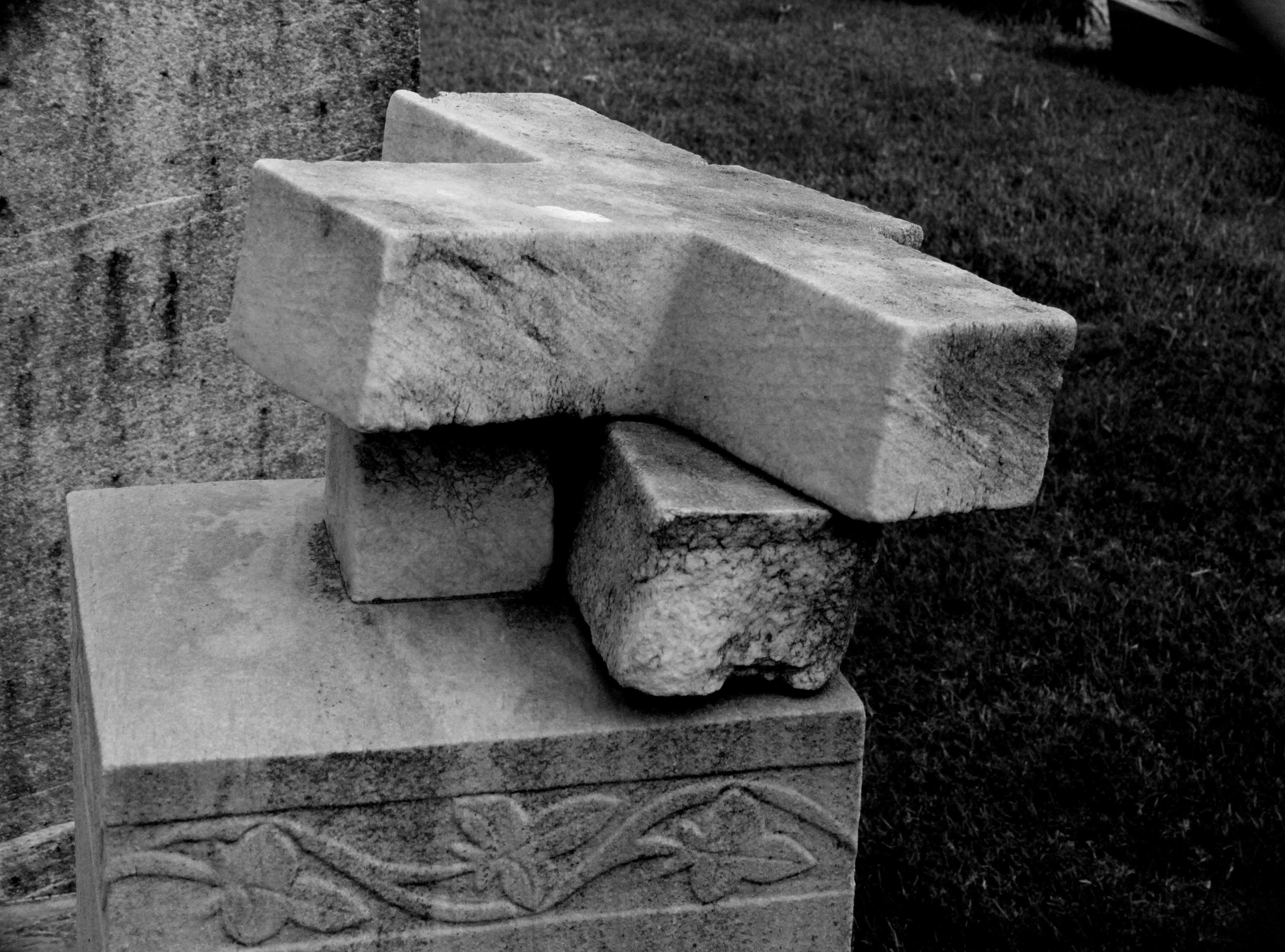
When you have a dream about an argument, maybe it has some weight and should be written about. Recently, I posted a photograph on my Google + page. This one, in fact (click on the photo for high-res version): My caption for it was “What more is there to say?” Partly this was just to have a caption, but also to prompt potential discussion. As symbol, the photograph serves a number of functions, from melancholy to condemnation. It did prompt a discussion, between two friends of mine who do not know each other, the core of which centers on the divergent meanings of such symbols for them and a question of sensitivity. I won’t reproduce the exchange here, because as far as I’m concerned the question that it prompted for me was one of the idea of “sacredness” and the appropriate use of symbols. Which immediately sent me down a rabbit hole about the private versus public use of symbols. Essentially, we all have proprietary relationships with certain symbols. Since I already posted the image, the sign of the cross is one, and not just for Christians. As a symbol it has achieved that universality advertisers dream of. It is instantly recognizable as the sign for a faith movement just about everywhere. It’s possible some aboriginal tribes in the beclouded valleys of New Zealand don’t know what it is, but on the level of international discourse it carries across all lines. [More . . . ]

Continue ReadingSymbols, Fair Use, and Sensitivities